General Education Reform
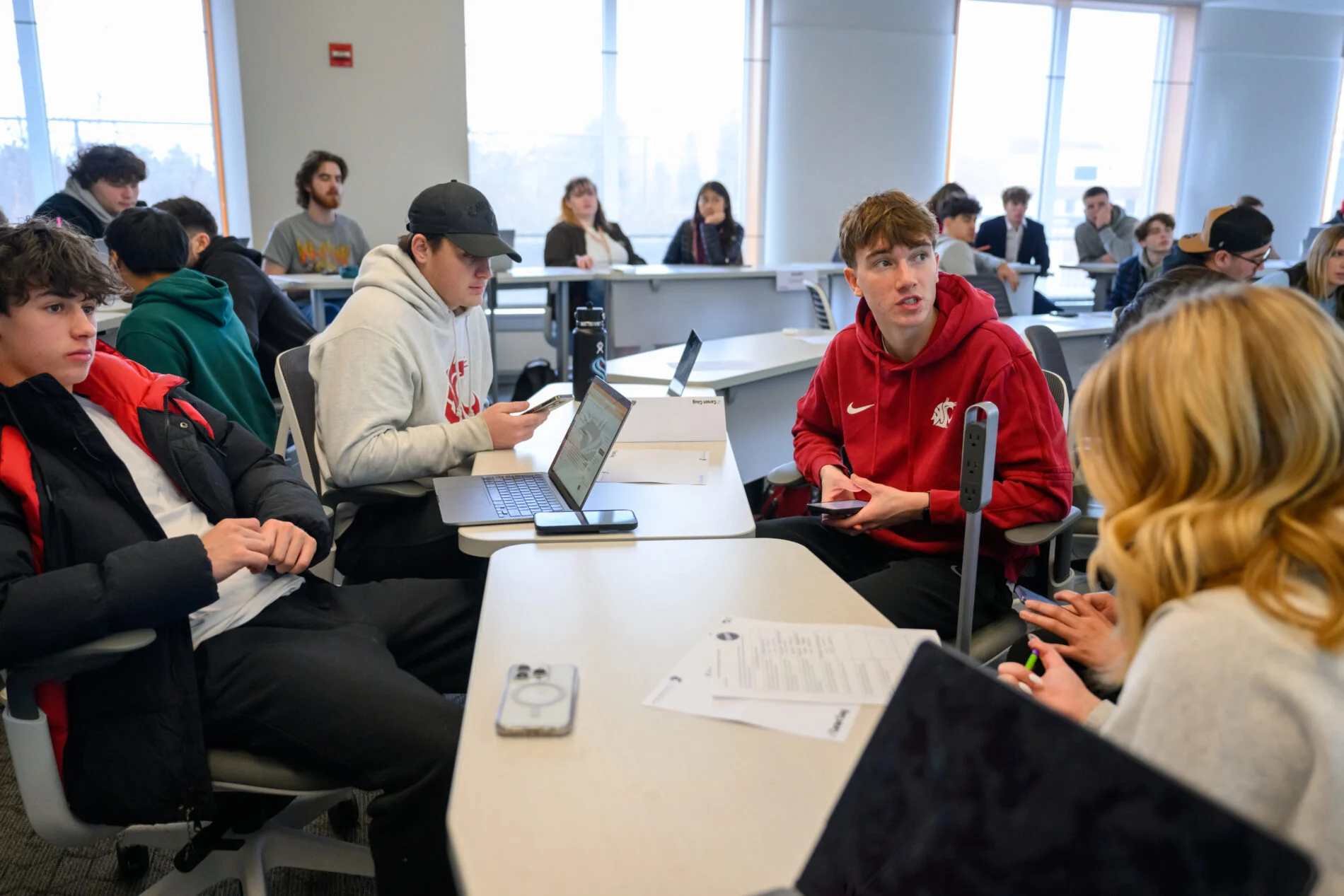
The reform effort is motivated by several key considerations:
- Today’s students have different backgrounds, needs, and expectations than when WSU’s current model was developed.
- Students increasingly seek clear connections between their coursework, future careers, and personal goals.
- The current system includes a large number of course options, which can make it difficult for students to see how courses connect to a larger educational purpose.
- Most general education coursework occurs early in a student’s academic career, limiting opportunities to reinforce key knowledge and skills over time.
- Emerging challenges and opportunities, including advances in artificial intelligence and rapidly changing workforce needs, require adaptable graduates who can think critically, communicate effectively, and continue learning throughout their lives.
- WSU has an opportunity to design a general education program that more intentionally incorporates experiential learning, high-impact educational practices, and the university’s land-grant mission.
The goal is not simply to revise requirements, but to develop a general education experience that supports student success, fosters meaningful connections across disciplines, and prepares graduates to thrive in their careers, communities, and lives.
General Education Reform Committee
The General Education Reform Committee brings together faculty, academic leaders, student affairs professionals, advisors, enrollment and assessment experts, and student representatives from across Washington State University. The committee is charged with exploring the future of General Education at WSU through a collaborative, evidence-informed, and broadly engaged process.
Co-Chairs
- Kara Whitman, Associate Professor and Associate Director of Undergraduate Programs, School of the Environment
- Sam Swindell, Vice Provost for Undergraduate Education
Committee Members
- Tariq Akmal, Associate Dean, College of Education, Health and Human Sciences; Professor, Education
- Caitlin Bletscher, Associate Professor, Human Development
- Shira Broschat, Professor, Electrical Engineering and Computer Science
- Andrew Brewick, Assistant Vice Provost for Enrollment Management and Director of Admissions
- Grace Carpenter, ASWSU Vice President
- Colette Casavant, CAHNRS Director of Student Success & Academic Advising
- Deborah Compeau, Dean, Carson College of Business
- Michael Goldsby, Associate Professor, Philosophy
- Lisa Guerrero, Vice Provost, Access and Opportunity
- Robin Mays, Associate Professor, English
- Romando Nash, Vice Provost for Student Affairs
- Jennifer Thigpen, Vice Chancellor for Academic Affairs, WSU Global
- Gregory Turner-Rahman, Professor and Chair, Digital Technology and Culture
- Kate Watts, UCORE Director; Professor, English
- Lindsey Brown, Director, Office of Assessment of Curricular Effectiveness, DAESA
- Jessica Willoughby, Professor, Strategic Communication
- Zhong Wang, Assistant Professor, Kinesiology and Educational Psychology
- Matthew Zimmerman, Registrar
- Elly Sweet, CAS Associate Dean and Academic Director, WSU Tri-Cities
Committee Transitions
The committee gratefully acknowledges the contributions of the following members, whose service during the early stages of this work helped establish a strong foundation for the reform process:
- Former Co-Chair Bill Davis, Vice Provost, Vice Provost for Accreditation and Education Policies
- Kathleen McAteer, Senior Associate Vice President and Vice Provost, WSU Tri-Cities
- Terese King, Former Director of University Advising, DAESA
During Fall 2026, Bill Davis will stay engaged with the committee leadership and work alongside the current co-chairs as part of a phased transition process. This approach will help ensure continuity as the committee advances from vision development and framework design into the next stages of General Education reform.
Our Commitment to a Thoughtful and Inclusive Process
General Education plays a central role in every student’s undergraduate experience. Because of its importance, we are taking a deliberate and collaborative approach to this work. The committee’s process is guided by research, lessons from peer institutions, ongoing conversations with the WSU community, and close collaboration with the WSU Faculty Senate. We believe the best outcomes come from developing a shared vision, engaging members of the WSU community throughout the process, and taking the time to carefully consider multiple perspectives.
We also recognize the tremendous work that faculty, departments, and colleges have invested in UCORE over the years. The current program reflects decades of thoughtful curriculum design and a strong commitment to student learning. This work is not about starting over. It is about building on what is working well, identifying opportunities for improvement, and ensuring that General Education continues to serve future generations of WSU students.
As the process moves forward, we are committed to transparency, shared governance, and meaningful opportunities for feedback. Faculty, staff, students, advisors, alumni, and community partners all bring valuable perspectives, and their input will help shape the committee’s recommendations. Our goal is to develop a General Education program that reflects WSU’s land-grant mission and supports student’s growth, preparation, and future success.
Our Process
The General Education Reform Committee is using a collaborative, evidence-informed, and community-engaged process to explore the future of General Education at WSU. Because General Education touches every undergraduate student and every academic unit, the committee is taking the time necessary to build a strong foundation, engage members of the WSU community throughout the process, and thoughtfully evaluate options before making recommendations.
Phase 1: Discovery, Research, and Vision Development (Spring 2026, Completed)
The first phase focused on understanding the current state of General Education at WSU and developing a foundation for future work.
During this phase, the committee:
- Established the operating principles for its work.
- Reviewed the current UCORE program, requirements, and learning outcomes.
- Examined research and national conversations related to General Education and student success.
- Studied General Education models, reform efforts, and best practices from peer and aspirational institutions.
- Identified key challenges and opportunities facing General Education at WSU.
- Developed a draft vision statement, context statement, and draft student learning goals to guide subsequent discussions and decision-making.
This foundational work helped the committee clarify what WSU hopes students will gain from their General Education experience and establish a shared framework for future conversations.
Phase 2: Engagement, Framework Development, and Curriculum Design (Fall 2026)
During Fall 2026, the committee is engaging the WSU community while exploring potential approaches for a future General Education program. Building on the vision, context statement, and draft learning goals developed in Phase 1, the committee is working to identify and evaluate possible frameworks, curriculum structures, and student pathways.
Current activities include:
- Refining the draft vision statement and learning goals based on community input.
- Exploring potential General Education frameworks and organizing principles.
- Developing and evaluating draft curriculum structures and student pathways.
- Soliciting feedback on the vision, context statement, learning goals, and emerging framework concepts.
- Hosting listening sessions, engagement opportunities, and a university-wide survey to collect feedback on the draft vision statement, learning goals, and potential framework concepts while gathering input from faculty, staff, students, advisors, administrators, and other members of the WSU community.
- Working collaboratively with the WSU Faculty Senate and providing regular updates to the Faculty Senate Executive Committee to ensure ongoing faculty engagement and shared governance throughout the reform process.
- Identifying priorities, concerns, opportunities, and implementation considerations that should inform future recommendations.
- Refining ideas and framework concepts based on stakeholder input.
The committee welcomes broad participation during this phase and encourages members of the WSU community to share their perspectives through scheduled listening sessions and surveys as the work continues. Feedback gathered throughout Fall 2026 will help shape and refine the framework options that move forward for further consideration.
Phase 3: Recommendation Development and Refinement (Spring 2027)
Once the committee identifies the preferred direction, it will focus on refining its recommendations and addressing key questions related to implementation and feasibility.
Activities will include:
- Refining the proposed General Education framework.
- Considering governance, assessment, and continuous improvement processes.
- Evaluating advising, transfer, and degree-planning implications.
- Identifying resource needs and opportunities.
- Developing recommendations for implementation planning.
The committee will continue to communicate with members of the WSU community and solicit input as recommendations are refined.
Phase 4: Implementation Planning
Following the selection of a preferred structure and any necessary approvals, attention will shift to operationalizing the new General Education program.
This work will include:
- Creating implementation timelines and transition plans.
- Developing processes for course review and approval.
- Establishing assessment and evaluation strategies.
- Supporting faculty and academic units through the transition.
- Developing advising, communication, and student-support resources.
- Defining the governance structure for the new General Education program, including roles and responsibilities for oversight, review, and continuous improvement.
- Establishing processes for ongoing faculty participation and shared governance in the management, assessment, and evolution of the General Education curriculum.
Implementation planning will help ensure that any new General Education program can be effectively launched and sustained over time.
Continuous Campus Engagement
Campus engagement is not limited to a single phase of the process. Listening sessions, surveys, presentations, and other opportunities for input will occur throughout the reform effort. Feedback received from the WSU community will help shape and refine the committee’s work at every stage.
The committee is committed to maintaining transparency, sharing updates regularly, and ensuring that members of the WSU community have meaningful opportunities to contribute to the future of General Education at WSU.
Anticipated Implementation Timeline
Pending university review and approval processes, the committee’s work is intended to inform a General Education program that could be implemented beginning in Fall 2028.
Your Chance to Engage!
Share Your Feedback
We want to hear from you. Please review the draft context statement, vision statements, and learning goals and share your feedback through the survey below. Your input will help inform the committee’s ongoing work as we explore the future of General Education at WSU.
You will be able to share your feedback on the draft vision and learning goals via a Qualtrics link that is coming soon.
Coming soon: Listening sessions and other opportunities to provide input/feedback.